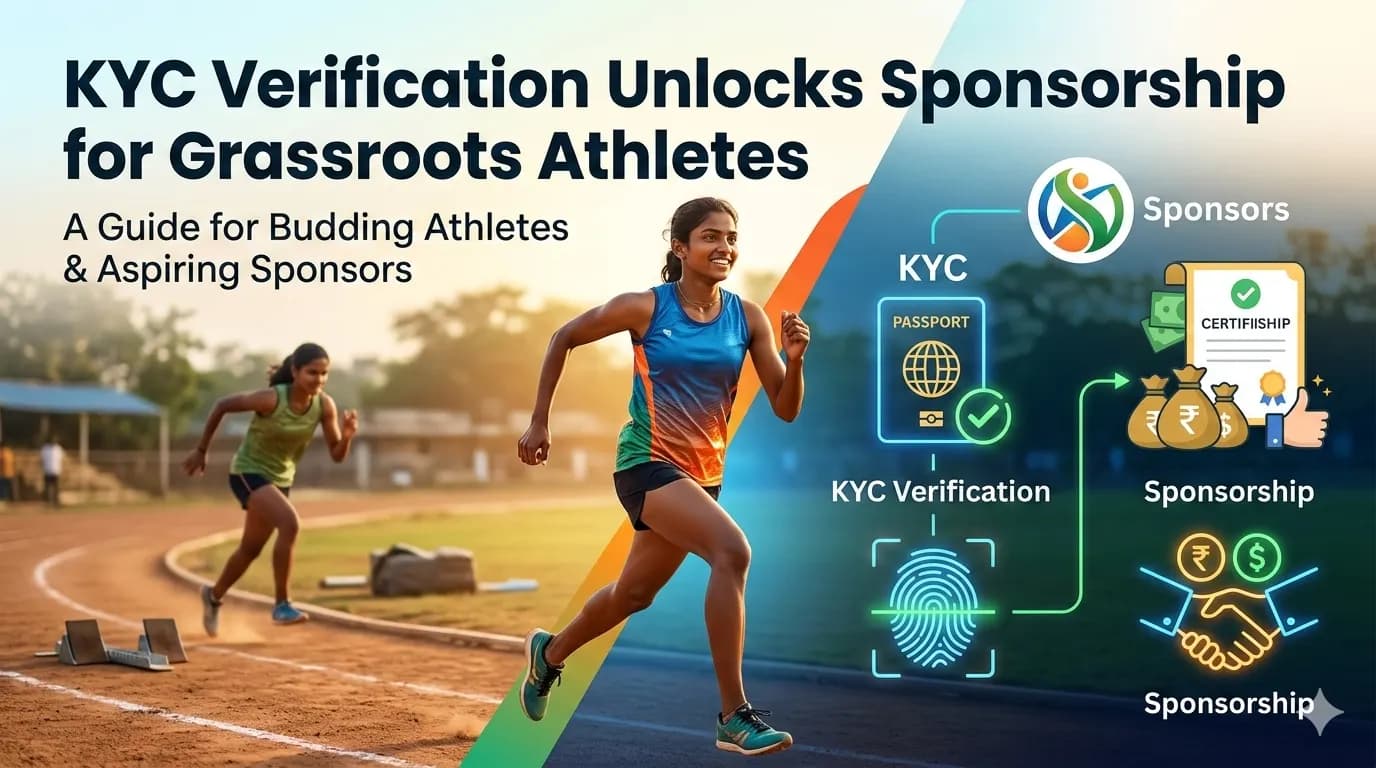
Sponsorship in Indian sports has a trust problem. Brands want to invest in athletes, but they cannot verify who they are dealing with. Unlike celebrity athletes with public profiles and professional management, grassroots athletes have no standardised way to prove their identity, credentials, or track record.
This is where KYC verification changes the game.
The trust deficit in Indian sports
When a brand considers sponsoring a grassroots athlete, they need answers to basic questions:
- Is this person who they say they are? Identity fraud is a real concern in digital marketplaces.
- Do they actually compete in this sport? Self-reported profiles are unreliable.
- Are they affiliated with a legitimate organisation? Institutional backing signals credibility.
- Can they legally receive payments? Financial compliance requires verified identity.
Without answers to these questions, brands default to the safe choice: celebrity athletes with established reputations. This leaves thousands of talented athletes without commercial support.
The problem is acute across the industry. Fake profiles, inflated credentials, and unverified claims are common across social media and sports directories. For organisations running events and for athletes themselves, this lack of trust is a barrier to growth.
What KYC verification looks like
On KIBI Sports, athlete KYC verification involves three layers:
- Identity verification: Government-issued documents (Aadhaar, PAN) are uploaded and reviewed by administrators. This confirms the athlete's legal identity.
- Institutional affiliation: Athletes join through invite codes from verified organisations. This confirms they belong to a real academy, league, or federation — an inherent layer of trust where the referring organisation vouches for the athlete's connection to the sport.
- Profile review: Sports credentials, achievements, and experience are reviewed before the profile is marked as verified. Unlike automated-only systems, human review adds a quality layer that can assess whether claimed achievements and qualifications are legitimate.
The result is a profile that brands can trust. Not because the athlete claims to be legitimate, but because the platform has verified it through multiple independent signals.
How this unlocks sponsorship
With verified profiles, the economics of grassroots sponsorship change:
Lower risk for brands
When every athlete in a campaign shortlist has verified identity and institutional backing, the brand's risk drops significantly. They know the person exists, competes in the stated sport, and can legally receive payments.
Automated matching at scale
Verified, structured profiles enable AI-powered matching. Instead of manually researching athletes, brands submit a campaign brief and receive scored recommendations. The algorithm can only work reliably because the underlying data is verified — scores based on unverified claims are worthless.
Transparent payments
With verified identities linked to bank accounts, campaign payouts can be processed securely and automatically. No more manual bank transfers to unverified accounts, no compliance risk for the brand.
Portable profiles
When an athlete moves from one organisation to another — changing academies, joining a new league — their verified profile travels with them. No starting from scratch. The verification follows the athlete.
Fair competition
In events and leaderboards, verified profiles ensure that rankings and achievements are based on real performance, not fabricated stats. This matters for both athletes who want fair recognition and organisations that need defensible results.
Compliance built in
India's DPDP Act 2023 requires consent-based data processing and user rights management. A responsible KYC process must include:
- Clear consent before collecting documents
- Secure storage with encryption
- Purpose limitation (documents used only for verification)
- Right to erasure (athletes can request document deletion)
- Data minimisation (collect only what's needed)
KYC verification, done properly, creates the compliance infrastructure that both brands and athletes need.
The nano-to-mega pipeline
The real power of KYC-verified profiles is that they create a pipeline from nano athletes (under 10K followers) to mega athletes (1M+). A nano athlete who completes KYC, participates in campaigns, and builds a track record on the platform becomes progressively more attractive to larger brands.
Over time, a verified athlete builds a digital portfolio: events attended, campaigns completed, deliverables submitted, ratings received. This portfolio becomes more valuable than any resume, because it is backed by verified data rather than self-reported claims.
This is the sponsorship ladder that does not exist today. Celebrity sponsorship is a closed club. KYC-verified platforms open the door for every athlete to start climbing.
Getting started
For athletes: Completing KYC verification is the single highest-impact action you can take to attract sponsorship opportunities. It takes under 10 minutes and immediately makes your profile visible to brands running campaigns on the platform.
For brands: Requiring KYC verification in your campaign criteria is the simplest way to ensure quality and compliance. Every athlete who appears in your match results has been verified through document review and institutional affiliation checks.
For organisations: Encouraging your athletes to complete KYC benefits everyone in the ecosystem. Verified athletes attract sponsorship, which flows back through events, campaigns, and commerce.
Trust is the infrastructure that makes everything else possible. Without it, matchmaking is guesswork, payments are risky, and profiles are unreliable. With it, the entire sports ecosystem can operate with confidence.