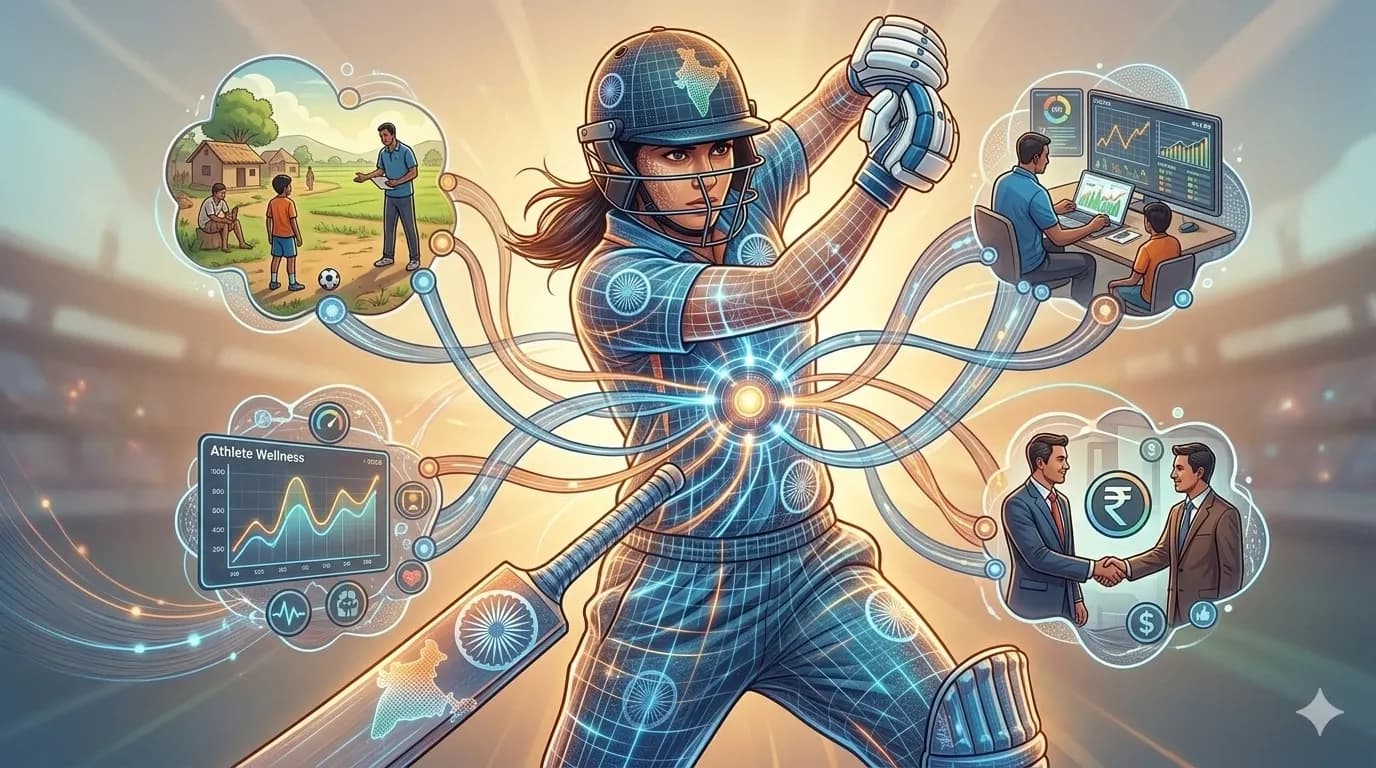
India's sports ecosystem is massive. With over 600 million people under the age of 25 and a growing interest in competitive sports beyond cricket, the opportunity is unprecedented. Yet most sports organizations operate with tools built for a different era: spreadsheets for athlete records, WhatsApp groups for coordination, and manual processes for everything from event registration to payments.
The fragmentation problem
A typical sports academy in India manages athlete registrations through Google Forms, tracks attendance in Excel, collects payments via UPI with manual reconciliation, and communicates through WhatsApp broadcasts. Leagues coordinate fixtures through email chains. Federations maintain athlete databases in local files that are never shared across organizations.
This fragmentation means:
- Athletes have no portable profile. Move from one academy to another, and you start from scratch.
- Organizations can't scale. Manual processes break at 100+ athletes.
- Brands can't find athletes. There's no central discovery layer for sponsorships.
- Data is siloed. No one has a complete picture of the ecosystem.
What a digital operating system looks like
A sports operating system isn't just one tool. It's an interconnected platform where every stakeholder — institutions, athletes, brands, and fans — can participate through a shared digital infrastructure.
For institutions, this means a SaaS admin portal: event management with full lifecycle support (creation, registration, check-in, scoring, certificates), athlete management with verified profiles, payment processing with automatic settlements, and campaign tools for brand partnerships.
For athletes, coaches, and other sports professionals, it means a mobile app: a verified digital portfolio that travels with them, event discovery and registration, campaign participation with transparent payouts, and community features like leaderboards and achievement badges.
For brands, it means an AI-powered matchmaking platform: the ability to define campaign briefs, get algorithmically scored athlete recommendations, and track ROI across geography, sport, and audience segments.
Why now
Three trends make this the right moment:
-
UPI and digital payments have solved the payments infrastructure problem. Razorpay and similar platforms make it trivial to process event registrations and campaign payouts.
-
Smartphone penetration among Indian youth is near-universal. Athletes expect mobile-first experiences.
-
The sponsorship market is shifting. Brands increasingly want measurable, micro-level sponsorships with authentic athletes, not just celebrity endorsements. This requires data infrastructure that doesn't exist today.
The path forward
Building this infrastructure requires an ecosystem approach. You can't digitize just one piece — a registration system that doesn't connect to payments, or an athlete database that doesn't connect to sponsorship opportunities, solves only part of the problem.
At KIBI Sports, we're building all four layers: SaaS for institutions, a mobile app for athletes, coaches, and other sports professionals, an AI sponsorship platform for brands, and a marketplace for commerce. The 90,000+ athletes and 100+ institutions already on the platform demonstrate that the demand is real.
The question isn't whether Indian sports will go digital. It's who will build the infrastructure that connects the ecosystem. We believe it has to be purpose-built for India's unique context — invite-based trust networks, multilingual support, UPI-native payments, and compliance with India's Digital Personal Data Protection Act 2023.