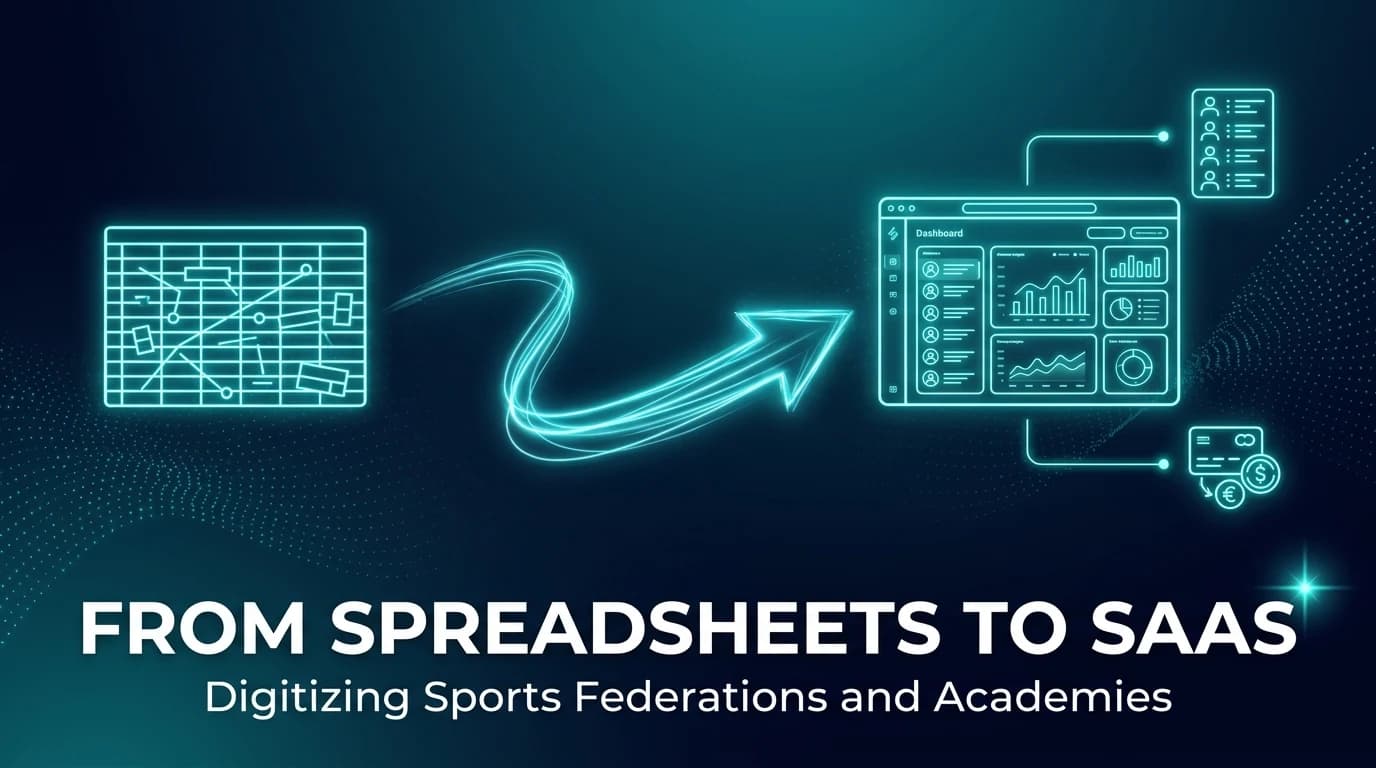
Walk into most sports academies in India and you'll find the same scene: a coaching staff managing dozens or hundreds of athletes using a combination of spreadsheets, WhatsApp groups, and handwritten registers. Payment records live in one place, athlete details in another, event schedules in a third, and communication happens across multiple channels with no central record.
This isn't because these organizations lack ambition. It's because purpose-built digital tools for Indian sports simply haven't existed.
The spreadsheet ceiling
Spreadsheets work remarkably well — up to a point. An academy with 30 athletes can track attendance, payments, and progress in Google Sheets. But several things break as organizations scale:
Registration and onboarding: When 200 athletes need to register for an event, a Google Form connected to a spreadsheet creates a data entry nightmare. Payment verification is manual. Duplicate entries are common. There's no KYC or verification layer.
Event management: Creating events, managing registrations, running check-ins, recording scores, and generating certificates are all separate manual processes. A single tournament might require 20+ hours of administrative work that has nothing to do with the sport itself.
Financial operations: Collecting payments through UPI with manual reconciliation, managing refunds through direct bank transfers, tracking coupon usage across events — these become full-time jobs for staff who are meant to be coaching.
Communication: Important updates go out through WhatsApp broadcasts that can't be tracked. Athletes miss notifications because they left the group. There's no per-event communication channel.
What a SaaS admin portal provides
A purpose-built SaaS platform addresses each of these pain points with integrated modules:
Onboarding and invites: Organizations generate invite codes for their athletes. Athletes sign up through the mobile app with OTP verification. KYC documents are submitted digitally and reviewed by admins. The entire process is tracked and auditable.
Event lifecycle: Create an event, set up registration with pricing and capacity limits, accept payments through Razorpay, generate QR-coded digital tickets, run check-in at the venue, record scores and results, and generate participation certificates — all from one dashboard.
Payments and payouts: Razorpay integration handles payment collection with automatic settlement tracking. Coupon management, invoicing, and subscription plans are built in. Campaign payouts to athletes flow through the same system.
Analytics and reporting: Event attendance, campaign performance, revenue tracking, and athlete demographics are available as dashboards with CSV export. No more spending hours compiling reports from multiple spreadsheets.
The implementation reality
Organizations worry that going digital means a painful migration process. The reality is simpler than expected:
Day 1: A 30-minute discovery call to understand the organization's structure and needs.
Days 2-3: Account provisioning with the organization's branding, staff roles configured, and initial settings applied.
Days 3-5: Existing athlete data imported (or fresh start with invite-based onboarding). Staff trained on the admin portal.
Week 2: First event published with registration, payments, and check-in ready to go.
The key insight is that organizations don't need to migrate everything at once. Starting with event management — the most immediately painful process — and expanding to athlete management, campaigns, and analytics creates a natural adoption path.
Already in use
At KIBI Sports, organizations are already using the admin portal. The platform covers the full operational lifecycle: 116 admin pages across 6 core modules (onboarding, memberships, events, communications, payments, analytics).
The organizations that move fastest are the ones that recognize a fundamental truth: the time their staff spends on administrative tasks is time not spent on what matters — developing athletes and growing the sport.
Spreadsheets got Indian sports to where it is today. Purpose-built SaaS will take it where it needs to go.