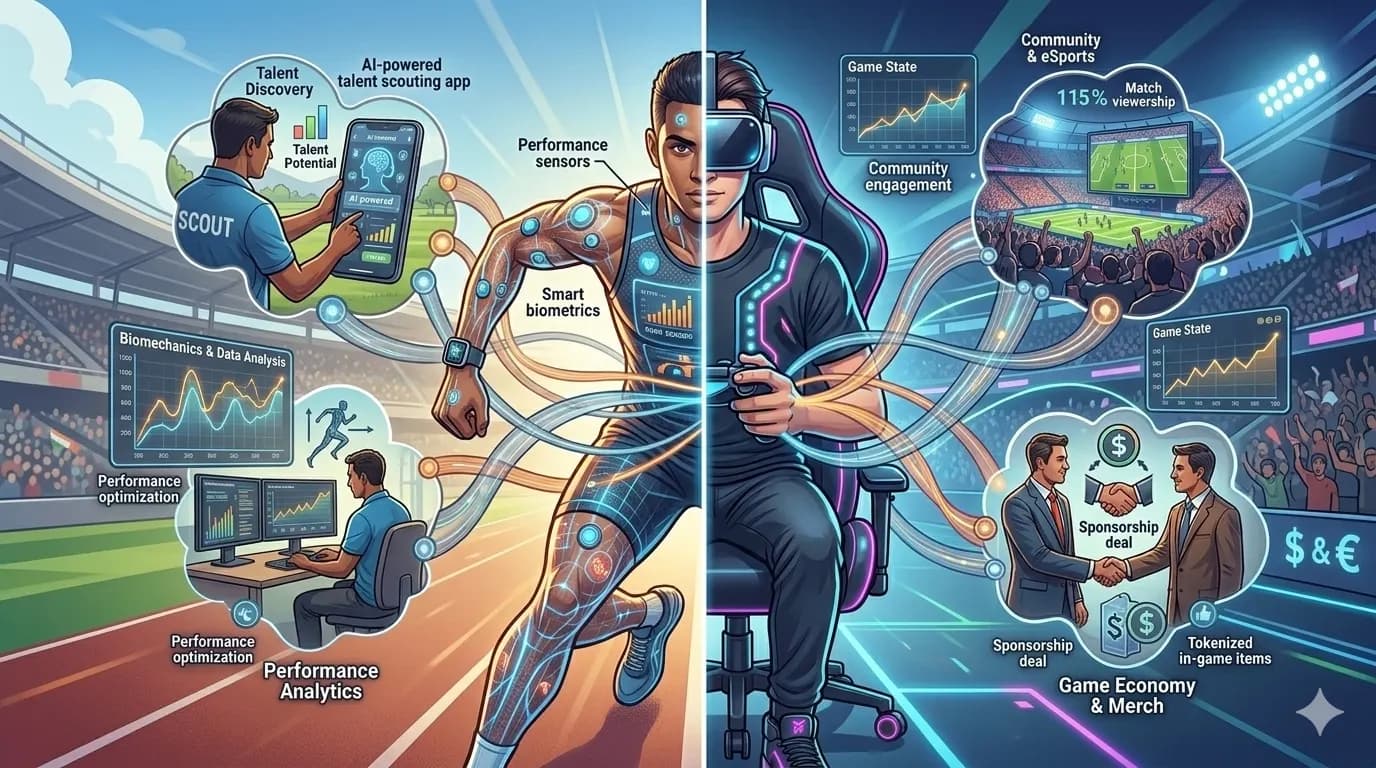
India's gaming and esports industry has attracted significant venture capital over the past five years. Companies like Dream11, MPL, and Nazara have raised billions, built massive user bases, and achieved public listings. The narrative is compelling: India has 500 million smartphone users, fantasy sports is a gateway to engagement, and digital-first business models scale quickly.
Meanwhile, technology for physical sports, the kind that helps real athletes train, compete, and earn, remains dramatically underfunded.
The funding gap
Between 2019 and 2024, Indian gaming startups raised approximately $2.8 billion across 200+ deals. Physical sports tech companies raised less than $100 million in the same period.
This is not because the market is small. India has:
- 600 million people under 25, the world's largest youth population
- 15+ organized sports with active competitive ecosystems
- 90,000+ athletes verified through sports organisations on KIBI Sports alone
- A government that allocated Rs 3,400 crore to Khelo India alone
The opportunity is enormous. The infrastructure to capture it did not exist until recently.
Why the gap exists
Gaming companies have a clear path to revenue: in-app purchases, advertising, entry fees. The unit economics are well understood, and the product is entirely digital.
Physical sports tech has a harder pitch:
- Customers are fragmented. Academies, leagues, federations, individual athletes, and brands all have different needs.
- Payment infrastructure is immature. Many organizations still collect fees in cash or via individual UPI transfers.
- No existing digital habit. Unlike gaming, physical sports organizations have no history of using software tools.
- Offline-to-online conversion is expensive. You need boots on the ground to onboard organizations.
What's changing
Several trends are converging to make sports tech investable:
- UPI and digital payments are now ubiquitous, even in tier-2 and tier-3 cities.
- Government mandates around data protection (DPDP Act 2023) and digital governance push organizations toward formal systems.
- Brand spending on grassroots sports is growing as companies look beyond celebrity endorsements.
- Platform economics allow one platform to serve multiple stakeholders (institutions, athletes, brands), creating network effects.
The platform approach
The gaming industry succeeded partly because platforms like Dream11 did not just build a product; they built an ecosystem. Fantasy sports connected fans, teams, data, and money in a single loop.
Physical sports tech needs the same ecosystem thinking. A platform that connects institutions (who manage), athletes (who compete), brands (who sponsor), and commerce (who equips) creates the same kind of network effect. Each stakeholder makes the platform more valuable for the others.
This is the thesis behind KIBI Sports: not another point solution for one problem, but a unified operating system for the entire sports ecosystem.
The next five years
If gaming was India's sports tech wave one, physical sports infrastructure is wave two. The market is larger, the impact is more tangible, and the government is actively investing. The companies that build the digital rails for this ecosystem will define how Indian sports operates for the next decade.