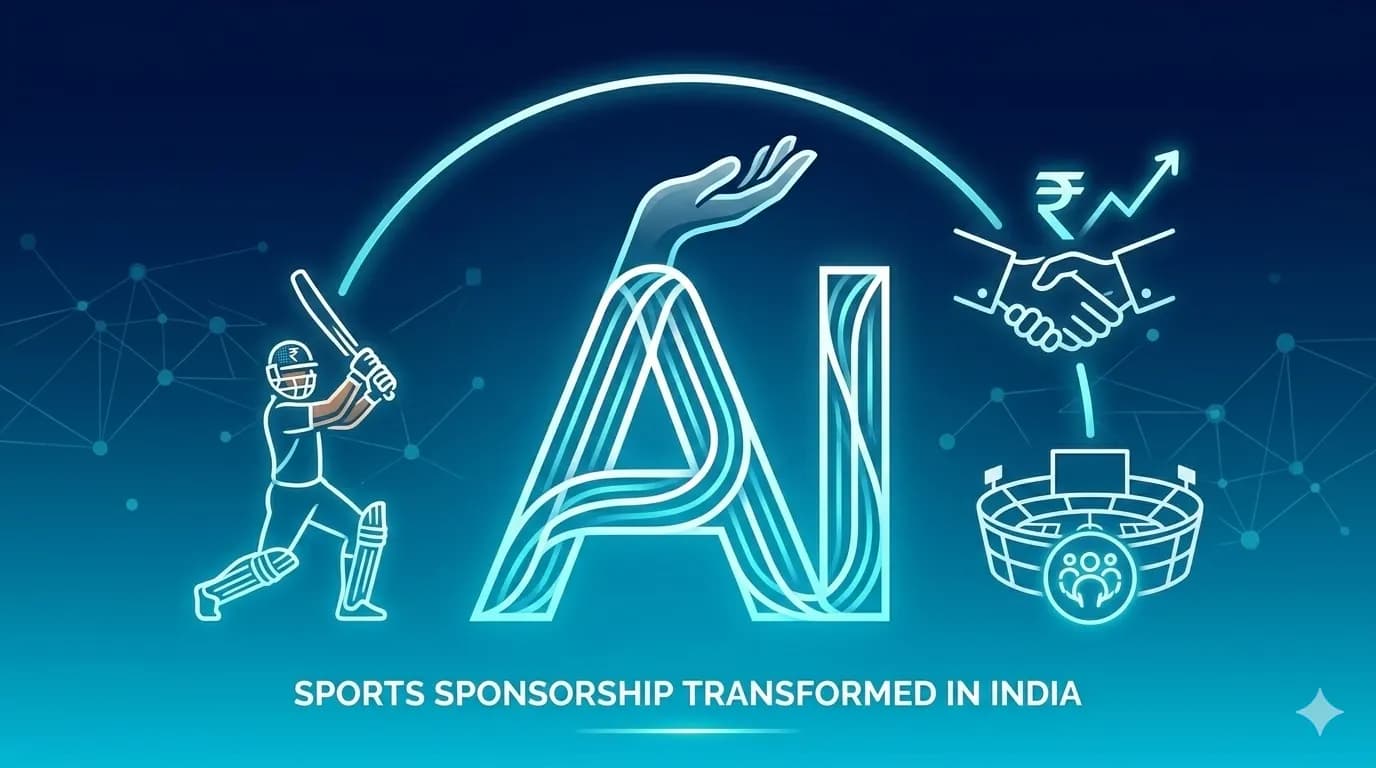
Sports sponsorship in India has traditionally been a top-heavy market. A handful of cricket stars command most of the brand budget, while thousands of talented athletes across other sports struggle to find any commercial support. The process is manual, relationship-driven, and opaque.
AI is changing this.
The old model is broken
Traditional sports sponsorship works through agencies, personal networks, and celebrity management firms. A brand wanting to sponsor athletes would typically:
- Reach out to a sports management agency
- Get presented with a handful of high-profile names
- Negotiate deals through intermediaries
- Hope for the best on ROI measurement
This model has significant problems:
- It excludes emerging athletes. If you're a talented kabaddi player in Jaipur with 28,000 Instagram followers, brands can't find you.
- It's geographically biased. Sponsorship deals cluster in metros, ignoring athletes in tier-2 and tier-3 cities.
- ROI is a black box. Brands spend lakhs with no systematic way to measure what they got back.
How AI matchmaking works
An AI-powered sponsorship platform changes the equation fundamentally. Instead of relying on human networks, the algorithm evaluates athlete-brand fit across multiple dimensions simultaneously:
Sport alignment: Does the athlete's sport match the brand's target audience? A fitness supplement brand matches differently with a cricketer versus a wrestler versus a swimmer.
Geographic reach: Where is the athlete's audience concentrated? A brand targeting Maharashtra gets more value from a Mumbai-based athlete than one in Chennai.
Audience tier: The platform classifies athletes into tiers (nano, micro, mid, macro, mega) based on verified metrics, not just follower counts.
Deliverable capabilities: Can the athlete produce Instagram reels? Appear at on-ground events? Do product trials? The match score factors in what the athlete can actually deliver.
Budget compatibility: The algorithm ensures recommendations fit the brand's budget range, from campaigns under 1 lakh to multi-lakh partnerships.
The result is a match score from 0 to 100 for every athlete-brief combination, making the selection process data-driven rather than relationship-driven.
What this means for Indian sports
The implications are significant:
For athletes: Thousands of mid-tier and nano athletes who were invisible to brands now have a path to commercial partnerships. A table tennis player in Kolkata or a swimmer in Chennai can be discovered by brands looking for exactly their profile.
For brands: Instead of overpaying for celebrity endorsements with unmeasurable ROI, brands can run targeted campaigns with multiple athletes, track deliverables, and compare performance across campaigns.
For the ecosystem: Money flows deeper into the sports ecosystem. When brands can efficiently find and work with athletes at every tier, more of the sponsorship budget reaches the people who need it most — the athletes building their careers.
Building trust into the system
AI matchmaking only works if the underlying data is trustworthy. This is why verified athlete profiles are essential. KYC verification, admin-reviewed credentials, and invite-based onboarding create a database where brands can trust that the athletes they see are real, active, and capable.
At KIBI Sports, the matching algorithm evaluates sport fit, geography, audience tier, deliverable capabilities, and budget compatibility to produce scored recommendations — not generic lists.
The future of sports sponsorship in India isn't about bigger celebrity deals. It's about building the infrastructure that connects brands with the right athletes at every level, measured by real outcomes rather than vanity metrics.